
Although the human foot is a subject in art that dates back thousands of years, it is seldom seen as a mere anatomical detail. Feet in paintings, drawings, sculpture, prints, and photography can convey movement, vulnerability, status, beauty, or a person’s relationship to the ground.
In some artists, the foot is more of a technical problem than a visual one; the foot has to look convincing in a large figure. For others, it’s a symbol, a focus, or an object of fascination with sufficient visual impact to support a whole work.
It is this versatility that accounts for the continued presence of feet in art throughout the ages and genres. The inclusion of a well-drawn foot can lend realism to the entire portrait, and a close-up of a foot or an isolated sculpture can be the focal point of the work. Modern fetish foot art takes that emphasis even more so, and makes the peripheral details the focal point of the image.
Why Drawing Feet Has Always Challenged Artists
The structure of the feet can be quite simple at first, but is hard to represent convincingly. They can alter in appearance based on weight, angle, movement and perspective – even a slight error can make the pose not look the way you intended it to and the whole figure look unnatural.
The heel, arch, toes, ankle and connection of all these parts must be taken into consideration by artists. It takes a different understanding to draw a human foot from the side than to draw it from above, below ,or face-on to the foot. If toes point, spread, bend or curl towards the floor, the proportions and visible shapes will be different again.
The difficulty increases if the foot is moving. A “walking” figure, for example, or a “dancing” figure, or a “climbing” figure, or a “running” figure, requires the foot to express balance and direction at the same time; a relaxed pose will give the artist the opportunity to study the anatomy carefully. The artist must make the viewer feel like there is weight in the body, and the foot is reacting naturally to it.
There was also a variety of different methods used in the past to draw feet. Some artists reduced them to symbolic forms, others worked towards a more precise anatomical likeness, and some artists examined how the postures influence the tendons, joints, and surface of the skin. Resources on representing the foot in art demonstrate how the conventions of each period evolved in their own way to depict toes, arch, position of the foot, and proportions. They were not always realistic, but they frequently were a reflection of what a culture deemed elegant, powerful, or meaningful.
From Ancient Symbolism to the Classical Ideal
Feet were not just physical features in ancient cultures, as they could mean so much more. They could symbolize humility, traveling, a connection to the spiritual realm, loss, power, or even interaction with the ground itself. Feet often also were important in religious and ceremonial art, where strong standing positions indicated a relationship between figures and lowered or exposed feet indicated service, submission, or vulnerability. Care must be taken when talking about the history of feet fetish in ancient cultures, art and literature, as modern conceptions of fetish cannot just be retroactively applied, but the symbolism and emotion of feet is clearly discernible.
Classical Greek and Roman artists emphasized proportion, balanc,e and idealized anatomy. The foot was particularly important in sculpture, where it helped to convey a sense of stability and vitality, and indicated whether a figure was standing, moving its weight, stepping forward, or about to take a step. It had a convincing physical presence even if the rest of the figure conformed to an idealization.
Costume, Character, and the Modern Reinvention of Foot Art
Modern-day artists and photographers frequently adopt costume to elevate their work in the realm of the foot-focused image to a more distinguished character. Costumes inspired foot images use recognizable patterns or elements of clothing, color, footwear, etc. to enhance a simple pose and give it a fantasy element. The feet are no longer seen as separate body parts, but rather are linked to personality, role, atmosphere, and story.
The same pose can be interpreted as completely different depending on the costume. Bare feet under a flowing fantasy dress can evoke a different attitude to feet in boots set beside a superhero look, polished toes with a play character look, or stockings used with a darker visual theme. The stance can stay the sam,e but the context around the pose gives a different interpretation.
The choice of fabric, accessories, make-up, and color also contribute to the elegant or dramatic, humorous or dominant, mysterious or relaxed nature of an image. These aspects illustrate that contemporary foot fetish photography emulates a number of the same approaches as painting, theatre, fashion, and character design. The best sets do not use costume merely for decoration, but to set the context and draw attention.
This also enables creators to give old concepts a new look using the current visual imagery. These can all be translated into modern-day theme sets by using classical poses, symbolic gestures, throwing the drapery into a specific pattern, and carefully controlled lighting. As the setting changes, the fundamental elements of art, such as composition, contrast, posture, and visual narrative, are surprisingly the same.
Drawings, Footprints, and the Shift Toward Personal Expression
Not all forms of feet art require anatomical detail or realistically representing the feet. At other times, the trace can become more significant than the foot itself, with the artist demonstrating his or her presence,ce if not his or her whole body.
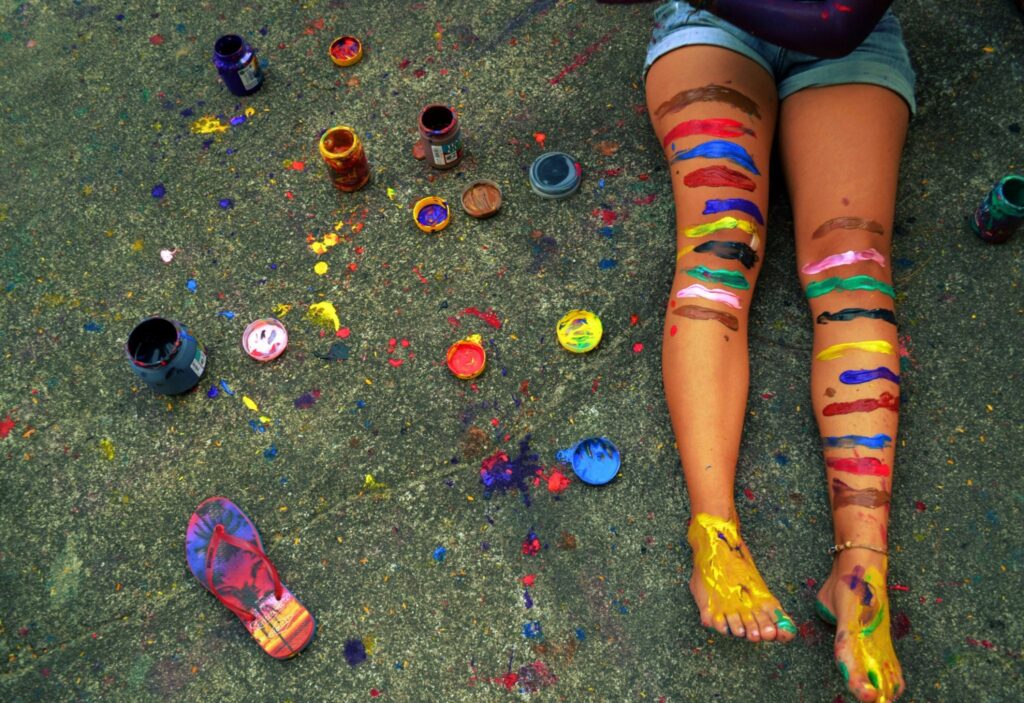
A footprint can be a work of art that depicts movement, memory, identity, or contact with a specific place. One painted footprint can capture a particular event, and a series of footprints can give an idea of a trip around a room, a landscape, or a space in one’s imagination. Footprints have been utilized in countless inventive ways in children’s projects, family keepsakes, performance work, and mixed-media. In each of these forms, the concept of using the body’s mark is present, but varies in practice. This allows artists to come up with numerous footprint art ideas without having to draw or create a whole figure.
Modern artists likewise utilize footprints alongside other media such as photographs, writing, cloth, paint, sculpture, or computer editing. The sense of intimacy can be heightened by being made by one’s own hands, but can also become a pattern, rhythm, pressure, and shape, losing the sense of the person who created it.
How Sculpture Gives the Human Foot Weight, Form, and Presence
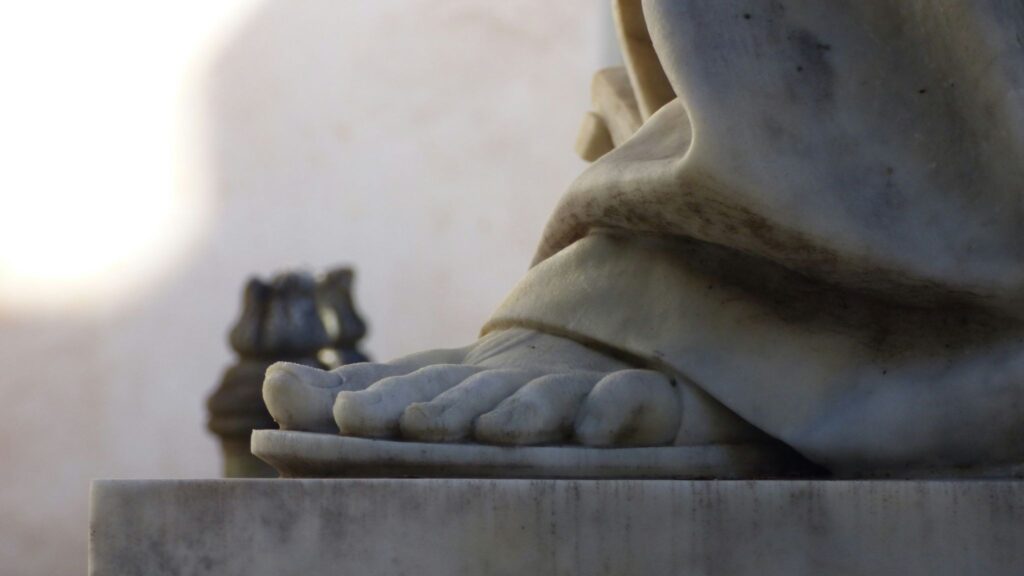
A drawing does not take up space . A drawing does not take up space; a foot sculpture does. The viewer is able to see the arch as it rises, and the heel, toes, and ankle from profile to front, back, and sideways. This three-dimensional feature enables the foot to feel more substantial and makes even the smallest change in posture evident.
The use of sculpture also helps to make balance easier to understand as the sculpture form seems to be pushing against, rising from, or interacting with a real surface. The contact of the heel to the base or the position of the toes pointing forward may indicate a relaxed foot, weight-bearing foot, or a foot caught in the middle of a step.
The human foot form is not only an anatomical form but a naturally complex visual form. Descriptions of its engineering and artistic design are apt because its bones, joints, curves, tendons and pressure points are all engineered to support its ability to move. The sculptors can highlight it realistically, or reduce it to larger forms, or emphasize certain distinctive characteristics, for example its rhythm, elegance, strength and/or fragility.
The selected material could change the whole meaning of the completed piece. A marble foot could evoke the sense of classical foreverness and the idealized beauty, whereas a bronze foot would add to the weight and monumentalism.
Why the Human Foot Continues to Inspire Artists
The foot is a subject that has never gone out of fashion due to its function, expression, and symbolism contained within one single well-defined shape. It helps to hold up the body, show movement, is sensitive to pressure, and adapts to posture. Meanwhile, an artist can show it as elegant, fragile, authoritative, familiar, bland,d or formal, in any given context.
The human foot is framed in various ways by drawings, paintings, footprints, sculpture, and modern photography. In each medium, there’s a new take on the same old form, demonstrating the ability of the subject to evolve without alienating itself from the older art forms.
Anybody with comments, questions, ns or suggestions for the articles or feedback on art and foot-related visual culture is always welcome. Use the Contact page to send us the topics you’d like us to write about in future FootFetishNetwork articles.
Check out the FootFetishNetwork Inst for new articles, model features, foot fetish highlights, and updates throughout the network. Be sure to join our orderings to stay updated on the upcoming topics, creative collections, and artistic discussions we produce.
Leave a Reply