
Fashion has always been able to direct focus, but not necessarily to where it would like it to be. Desire is created by style, beauty, posture, and even composition of the image, and many times, the most important element of the visual language is not the garment but the body that is composed around it.
That is the reason legs, footwear, arches, shiny skin, and lower body detail are frequently what people keep in mind from a fashion photo. These details in campaigns, editorials, and runway shots can subtly dominate the visual and become the focal point.
Why Fashion Imagery So Often Pulls the Eye Downward
Fashion has always been able to direct focus, but not necessarily to where it would like it to be. Desire is created by style, beauty, posture, and even composition of the image, and many times, the most important element of the visual language is not the garment but the body that is composed around it.
That is the reason legs, footwear, arches, shiny skin, and lower body detail are frequently what people keep in mind from a fashion photo. These details in campaigns, editorials, and runway shots can subtly dominate the visual and become the focal point.
Why Fashion Imagery So Often Pulls the Eye Downward
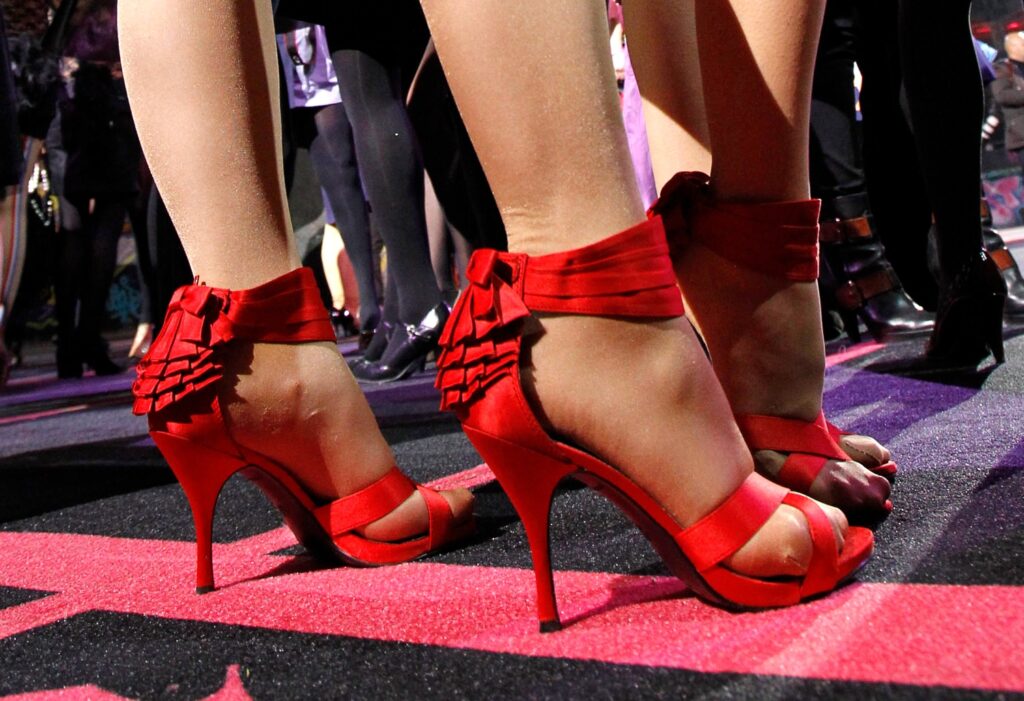
Line, balance, and emphasis are key to fashion imagery. The eye tracks silhouettes, posture, body angles, and how garments interact with bodies. That naturally draws attention down, in many cases, particularly when shoes, legs, or seated poses are included in the composition.
This occurs even when the image itself isn’t attempting to make that point apparent. A long line through the leg, a high heel, a bare ankle, or the curve on a crossed pose can provide a focal point and guide the viewer with little effort. The bottom half of the image is doing more work than the top half of the article of clothing.
This is one reason that the collection of beautiful feet fit so easily into this sort of visual language. Skin, posture, and detail are all carefully considered, and not so much the subject of a fashion shoot.
Contrast is also the key to runway photography and advertising. A polished shoe against bare skin, a floored surface against a bare foot, or a flat heel against soft material can be a pair of magnets that make the lower body more appealing. Those differences are used in fashion all the time since they draw attention to themselves.
The important thing is that the viewer is generally not aware of this until it is felt. The image calls attention to it first, and then the mind follows suit and knows what they mentioned.
Runways, Editorials, and the Beauty of Controlled Presentation
While runway visuals and editorial photographs are distinct in how they evoke desire, they both rely on control. In runways, movement, position, and repetition bring alive the styling, whereas in editorials, every angle is premeditated, and everything is frozen.
It’s sometimes that controlled display that packs the greatest visual punch in fashion. The eye can linger for longer on a still pose than on a moving one, making it more suggestive. The viewer starts to perceive line, texture, exposed skin, and positioning of the body in a much more focused manner.
Beauty is not always about the clothes in either of the two media. That is a product of body placement, the direction of the gaze, and the way that even minute elements may be what makes the image work.
When the Model Becomes the Whole Mood of the Image
The styling is strong, with some images working. Others work because the model completely alters the shot’s mood. The way an expression is portrayed, the stillness, the confidence, and body language can transform a pleasing fashion picture into a more memorable one.
It’s, for example, why model Alyssia Kent is so significant in this sort of visual area. Presence matters. A pose or style can be normal on one individual, and magnetic on the other, simply because attitude dictates how the viewer reads the image.
A good model will also provide the direction of the frame. Rather than just clothing, the viewer is reacting to an entire visual personality. The figure’s posture, expression, and pose now help to determine the image’s desire.
This is one of the reasons why fashion visuals are so much more than product display. Styling is not done to the body. It translates, hones, and infuses it with emotion.
Beauty, Detail, and the Visual Choices That Hold Attention
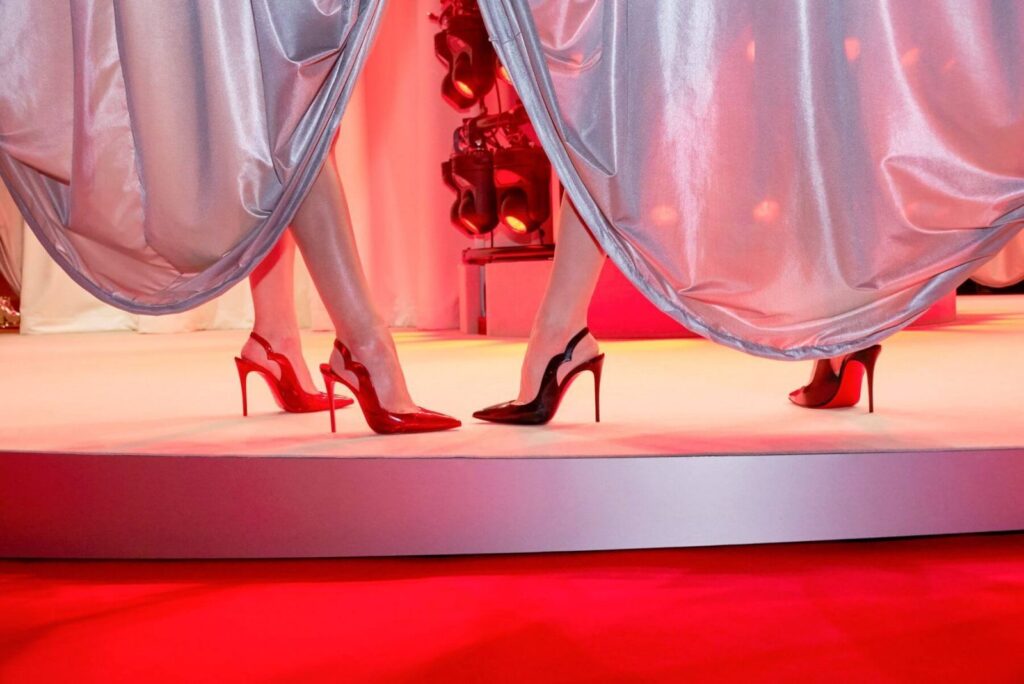
It’s often the little details that make for the most memorable fashion photos. A slanted leg, a pointed foot, a slight arch, a chair angle, a shiny shoe, or the curve of the calf can subtly become the most powerful element of the whole composition.
All of these details do not necessarily have to overpower the frame to be important. Indeed, they’re frequently more powerful when they’re unobtrusive in the photograph than when they’re called out. They’re something that the viewer will barely know they are seeing, and that is the secret to their effectiveness.
It’s the kind of restraint that often makes for beauty in fashion. The image does not have one obvious focal point, but several details compete with one another until one detail reaches out, unobtrusively capturing the viewer’s attention.
This is also the reason why someone like Ani Black Fox can be so visually striking. Certain models possess a basic level of composure, styling sensibility, and control over the lower half that makes even the most basic of setups look like it’s been carefully thought out and very much focused.
If fashion is able to strike this balance, the picture is more than just stylish. It becomes precise. It is the eye that knows where to go back; if the eye does not know, the viewer can’t tell at first glance why.
Fashion Imagery, Beauty, and Where the Eye Keeps Returning
Fashion is one way to create desire, but it’s not the only way to do it – and it’s not always about clothes. It achieves it with focus, posture, framing, and how the body is positioned within the picture. That’s why you see so many dynamic images go back to the same type of detail over and over again.
What people remember isn’t necessarily the loudest shot, but the best framed one. Sometimes, a strong line through the leg, the silhouette of a shoe, a casual sitting position, or the contrast between fabric and skin is what makes the overall shot.
Questions, information, and contact with our team can be made via our Contact page.
You can also follow us on Instagram to get updates, highlights, and more content from all over the network.
Line, balance, and emphasis are key to fashion imagery. The eye tracks silhouettes, posture, body angles, and how garments interact with bodies. That naturally draws attention down, in many cases, particularly when shoes, legs, or seated poses are included in the composition.
This occurs even when the image itself isn’t attempting to make that point apparent. A long line through the leg, a high heel, a bare ankle, or the curve on a crossed pose can provide a focal point and guide the viewer with little effort. The bottom half of the image is doing more work than the top half of the article of clothing.
This is one reason that the collection of beautiful feet fit so easily into this sort of visual language. Skin, posture, and detail are all carefully considered, and not so much the subject of a fashion shoot.
Contrast is also the key to runway photography and advertising. A polished shoe against bare skin, a floored surface against a bare foot, or a flat heel against soft material can be a pair of magnets that make the lower body more appealing. Those differences are used in fashion all the time since they draw attention to themselves.
The important thing is that the viewer is generally not aware of this until it is felt. The image calls attention to it first, and then the mind follows suit and knows what they mentioned.
Runways, Editorials, and the Beauty of Controlled Presentation
While runway visuals and editorial photographs are distinct in how they evoke desire, they both rely on control. In runways, movement, position, and repetition bring alive the styling, whereas in editorials, every angle is premeditated, and everything is frozen.
It’s sometimes that controlled display that packs the greatest visual punch in fashion. The eye can linger for longer on a still pose than on a moving one, making it more suggestive. The viewer starts to perceive line, texture, exposed skin, and positioning of the body in a much more focused manner.
Beauty is not always about the clothes in either of the two media. That is a product of body placement, the direction of the gaze, and the way that even minute elements may be what makes the image work.
When the Model Becomes the Whole Mood of the Image
The styling is strong, with some images working. Others work because the model completely alters the shot’s mood. The way an expression is portrayed, the stillness, the confidence, and body language can transform a pleasing fashion picture into a more memorable one.
It’s, for example, why model Alyssia Kent is so significant in this sort of visual area. Presence matters. A pose or style can be normal on one individual, and magnetic on the other, simply because attitude dictates how the viewer reads the image.
A good model will also provide the direction of the frame. Rather than just clothing, the viewer is reacting to an entire visual personality. The figure’s posture, expression, and pose now help to determine the image’s desire.
This is one of the reasons why fashion visuals are so much more than product display. Styling is not done to the body. It translates, hones, and infuses it with emotion.
Beauty, Detail, and the Visual Choices That Hold Attention
It’s often the little details that make for the most memorable fashion photos. A slanted leg, a pointed foot, a slight arch, a chair angle, a shiny shoe, or the curve of the calf can subtly become the most powerful element of the whole composition.
All of these details do not necessarily have to overpower the frame to be important. Indeed, they’re frequently more powerful when they’re unobtrusive in the photograph than when they’re called out. They’re something that the viewer will barely know they are seeing, and that is the secret to their effectiveness.
It’s the kind of restraint that often makes for beauty in fashion. The image does not have one obvious focal point, but several details compete with one another until one detail reaches out, unobtrusively capturing the viewer’s attention.
This is also the reason why someone like Ani Black Fox can be so visually striking. Certain models possess a basic level of composure, styling sensibility, and control over the lower half that makes even the most basic of setups look like it’s been carefully thought out and very much focused.
If fashion is able to strike this balance, the picture is more than just stylish. It becomes precise. It is the eye that knows where to go back; if the eye does not know, the viewer can’t tell at first glance why.
Fashion Imagery, Beauty, and Where the Eye Keeps Returning
Fashion is one way to create desire, but it’s not the only way to do it – and it’s not always about clothes. It achieves it with focus, posture, framing, and how the body is positioned within the picture. That’s why you see so many dynamic images go back to the same type of detail over and over again.
What people remember isn’t necessarily the loudest shot, but the best framed one. Sometimes, a strong line through the leg, the silhouette of a shoe, a casual sitting position, or the contrast between fabric and skin is what makes the overall shot.
Questions, information, and contact with our team can be made via our Contact page.
You can also follow us on Instagram to get updates, highlights, and more content from all over the network.
Leave a Reply